

Lake Stevens Dental · Implant planning and teeth grinding
Can You Get Dental Implants If You Grind Your Teeth?
Grinding does not automatically rule out implants. Your bite, oral health, and protection plan matter.
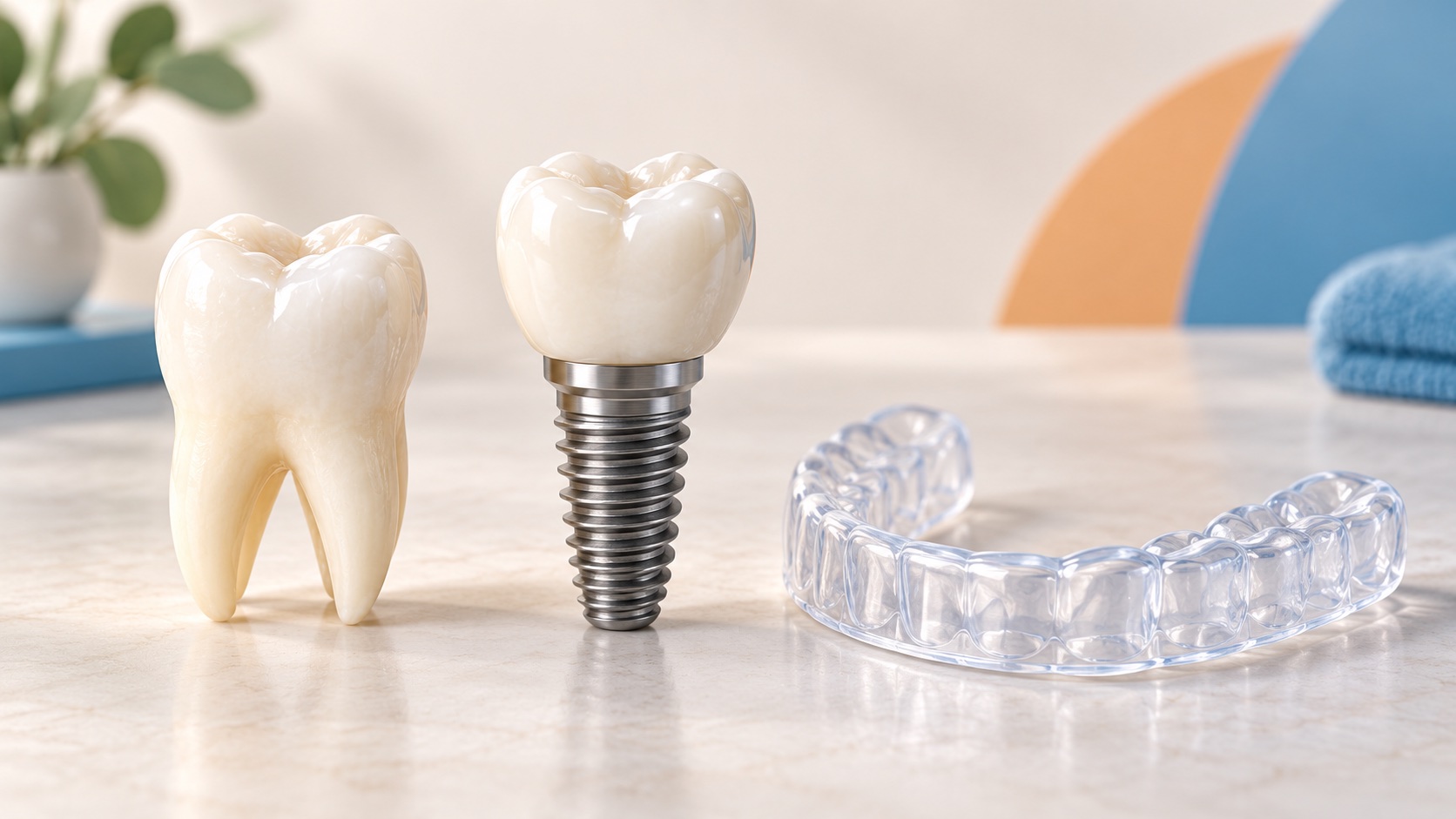
If you have a missing tooth and know you grind your teeth, you may wonder whether a dental implant is still an option. Perhaps you already wear a nightguard, have worn-down teeth, or have broken a filling or crown.
Grinding deserves attention during implant planning, but it does not automatically mean you cannot have an implant. At Lake Stevens Dental, an evaluation can help clarify your options and the precautions your treatment may require.
Quick answer: grinding does not automatically rule out implants
Teeth grinding and clenching, also called bruxism, can place extra force on teeth and dental restorations. That makes it an important consideration when planning a dental implant.
Some people who grind their teeth may still be candidates for implant treatment. The recommendation depends on factors such as bone support, gum health, bite forces, medical history, and the condition of the rest of the mouth.
An implant is not automatically the best choice, either. The goal is to compare reasonable options and plan for long-term care—not simply fill a gap.
How teeth grinding can affect a dental implant
For one missing tooth, a dental implant usually includes an implant placed in the jawbone and a crown that replaces the visible tooth.
Although these components are designed to handle chewing, they are not immune to damage. Repeated heavy grinding or clenching may contribute to problems such as:
- Chipping or damage to the implant crown.
- Loosening or damage involving connecting components.
- Excessive loading that can affect the implant’s long-term success.
Grinding can happen during sleep or while you are awake. You may not realize you are doing it.
This does not mean every person who grinds will have implant complications. It means your dentist needs to consider the forces on the replacement tooth, along with the health of its supporting tissues.
Learn more about how dental implants replace missing teeth.
Signs worth mentioning at your dental visit
Tell your dentist if you have noticed:
- Flattened or worn chewing surfaces.
- Repeated chips or fractures in teeth, fillings, or crowns.
- Jaw muscle soreness, especially when you wake up.
- A habit of holding your teeth tightly together during the day.
- A partner hearing grinding sounds while you sleep.
- A nightguard that is worn, damaged, or no longer fits comfortably.
These signs do not prove that grinding is the cause. Tooth wear and jaw discomfort can have other explanations, and some people who grind have few noticeable symptoms.
If you already use a nightguard, bring it to your appointment. Previous dental records may also help your dentist understand changes over time.
What your dentist checks before recommending an implant
An implant evaluation looks at more than the empty space.
Whether a damaged tooth can be saved. If the tooth is still present, your dentist first considers whether it can be predictably repaired. Grinding alone is not a reason to remove a tooth.
Bone and gum support. The area needs an appropriate foundation. Gum disease or insufficient bone may require treatment before an implant can be considered.
Your bite and existing dental work. Worn teeth, repeated fractures, neighboring crowns, and the way your teeth meet can influence planning.
Health and healing factors. Medical conditions, medications, smoking, and other factors may affect treatment decisions.
Your ability to maintain the result. Cleaning, follow-up visits, and any recommended protective appliance are part of the long-term plan.
An exam and appropriate imaging help answer these questions. Our guide to a dental implant consultation explains the evaluation in more detail.
How a protection and maintenance plan may help
If an implant is appropriate, your dentist may recommend several precautions.
Individualized bite and crown planning
The position and design of the replacement tooth matter. Your dentist considers how it will contact the opposing teeth and function with the rest of your bite.
There is no single implant design or crown material that eliminates every grinding-related risk.
A protective nightguard when appropriate
A dentist may recommend a nightguard to help protect teeth and restorations from damage associated with grinding.
A guard does not necessarily stop the grinding itself, and it cannot guarantee that an implant or crown will never develop a problem. Its fit should be checked, particularly after new dental work.
Do not assume that an old guard—or a store-bought one—is suitable for your new restoration.
Regular cleaning and follow-up
Implants still need daily cleaning and professional monitoring. Follow-up visits allow your dental team to check the surrounding gums, the restoration, and any changes in your bite or appliance.
Report new looseness, chipping, discomfort, or a change in how your teeth meet rather than waiting for your next routine visit.
Attention to daytime clenching
If you notice yourself clenching while working or concentrating, mention it. Your dentist can discuss practical ways to recognize the habit and whether other evaluation is appropriate.
Do not change prescribed medications or attempt to adjust your teeth, crown, or appliance yourself.
What if a tooth is painful, broken, or loose now?
An active dental problem should be evaluated before focusing only on a future implant.
Pain when biting, a broken tooth, swelling, drainage, or a loose restoration may have several causes. The first step is to identify the problem and determine whether the tooth can be saved.
Until you receive guidance, avoid chewing hard foods on the affected area. Do not try to glue a broken tooth or tighten an implant component yourself.
Call 425-334-1934 for guidance about tooth pain, a broken tooth, or a loose restoration.
See our emergency dental care information for additional guidance. Seek emergency medical care immediately for trouble breathing or swallowing, or rapidly spreading facial or neck swelling.
Frequently asked questions
Does grinding mean my dental implant will fail?
No. Grinding is a risk factor, not a prediction that treatment will fail. Your dentist considers the amount of wear or damage, your bite, bone and gum support, and other health factors before recommending treatment.
Will a nightguard stop me from grinding?
Not necessarily. A nightguard is often used to help protect teeth and restorations, but it may not stop the underlying grinding activity. It also does not eliminate every implant-related risk.
Can I use my old nightguard after getting an implant crown?
Possibly, but have the fit checked first. New dental work can change how an appliance fits or contacts your teeth. Bring the guard to your appointment and do not force it into place if it feels different.
Is a bridge automatically safer if I grind my teeth?
No. Grinding can also affect natural teeth and bridges. The choice between an implant, bridge, or another approach depends on the whole mouth, including the neighboring teeth, supporting tissues, bite, and maintenance needs.
Talk through your options in Lake Stevens
A missing tooth can make chewing less comfortable, but the right replacement should account for more than the gap. If you grind or clench, that information belongs in the treatment plan from the beginning.
Lake Stevens Dental on Grade Road helps adults in Lake Stevens and nearby communities, including Granite Falls, understand their tooth-replacement options. An evaluation can clarify whether an implant is appropriate, what preparation may be needed, and how the result would be maintained.
Call Lake Stevens Dental at 425-334-1934 or request an appointment to discuss your missing tooth and grinding concerns.
This article provides general information and does not replace an individualized dental evaluation.
Discuss your implant and grinding concerns
Related resources
Dental implants in Lake Stevens